


From electric shocks to invented diseases, this book celebrates the curious detours that advanced science. Read the review and excerpt.
This unique collection of medical facts and fascinomas is as informative as it is entertaining.
From David Agnew’s use of eels to devour the flesh from corpses to study the human skeleton (specifically the acetabulum) to Dr Guillaume Duchenne’s zapping of the zygomatic muscle on dead heads (literally) to determine the mechanism of smiling, author Adam Taor relates a litany of quirky, alphabetically arranged tales that reflect medicine’s more eccentric history.
While many of the anatomical names and physiological processes might sound familiar, especially to anyone in the medical field, I will guarantee the stories behind these names and processes will likely come as a revelation to readers.
Just as one example, the story of how we came to discover that the frontal lobe was the part of the brain that dictates personality was certainly news to me.
Who knew that this scientific fact that is now considered general knowledge was the result of some hapless American in the mid-nineteenth century who managed to lose his left frontal lobe but survive following an unfortunate accident with an iron bar?
This book is just a fascinating read, helped enormously by the author’s clever, funny and very accessible style of writing.
For those with an interest in medicine, or perhaps an interest in history or even just an interest in off-beat, unusual but often innovative characters who have shaped modern-day medicine in one way or another – this is a must-read!! I loved it.
EXCERPT
Thymus
How medics were anesthetized from blame for kids’ deaths
When is a disease not a disease? The short answer is: when it’s invented to solve a problem. In this case, the medical profession’s problem was explaining sudden deaths in children. The resulting concocted disease had the added bonus of protecting doctors implicated in the tragedies. Granted, this (mis)diagnosis was founded on ignorance, rather than malevolence. Though self-serving hubris also played its part, with the help of a convenient anatomical patsy. A supposedly abnormal organ to scapegoat. The mysterious thymus.
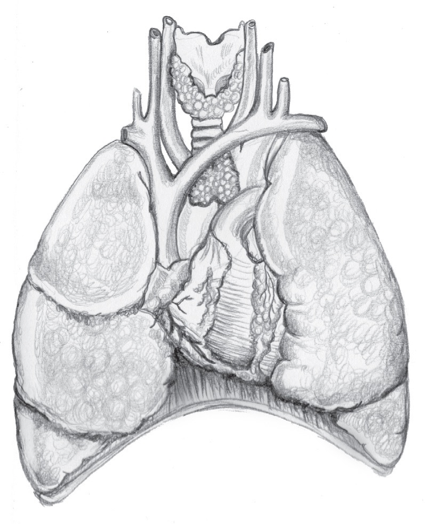
It wasn’t until the 1960s that the thymus’s function was understood. Critical for the development of the immune system, it’s behind the top of the breastbone (sternum), between the lungs.
Here, infection-fighting white blood cells—T cells—develop. Most are made before birth, and in childhood. Importantly, the thymus is relatively large until puberty, then shrinks, being barely identifiable as an organ in the elderly.
Rewind to the late nineteenth century. Then, adult norms were often applied to kids. Hence, thymuses in kids should be small, as per adults. So a “large” thymus in a child who’d died suddenly was often considered the cause, it having pressed on surrounding structures. (Most children died after severe, more chronic illnesses, which could lead to thymus shrinking, so the organ wasn’t implicated then.)
“Progress” was made in 1889, when a disease, rather than mechanical pressure of the thymus, was identified as a cause of sudden death. This was “status lymphaticus.”
The affliction featured an enlarged thymus and lymph glands, plus poor health, and could lead to death with little provocation, mostly in kids and young people. Hence, status lymphaticus came in handy for doctors needing to explain sudden deaths.
In particular, it was a boon for those who administered chloroform surgical anaesthetic (not used today because of its risks). Deaths under anaesthesia could now be conveniently blamed on status lymphaticus.
A 1909 article in the Lancet medical journal commenting on one such disaster said it “might have sustained a charge of manslaughter,” were it not for the thymus being implicated following an autopsy.
This wasn’t just ignorance at play. Again, in 1909, the Lancet stressed the importance of diagnosing status lymphaticus, so deaths weren’t attributed to chloroform.
In 1912, the American Surgical Association was told some reports of status lymphaticus deaths were probably written to distract attention from the anaesthetic.
Eventually, better understanding of normal thymus anatomy put the kibosh on the Diagnosis, as per a 1931 Lancet editorial declaring “The End of Status Lymphaticus.”
But not before it had helped protect many reputations, as this 1914 quote from the journal Nature illustrates: deaths under anaesthesia “fall into three categories: first, those which no human skill can avert, for example, in unsuspected cases of status lymphaticus; secondly, those due to want of knowledge on the part of the medical practitioner; and, thirdly, those which occur in the practice of unqualified persons.”
Status lymphaticus exonerated the qualified and knowledgeable. And what medic would say they weren’t?
Bodypedia: A Brief Compendium of Human Anatomical Curiosities, by Adam Taor
New South Books
RRP $29.99
